Ujaan Project
Empowering Girls: The Ujaan Project’s Mission is to Ensure Dignity
The Ujaan Project addresses a critical yet often overlooked issue—the basic right of women and girls to manage menstrual hygiene and reproductive health with dignity. Across many communities, conversations around menstruation remain suppressed, leading to harmful practices and severe health risks. Nearly 70% of reproductive health issues stem from poor menstrual hygiene, mirroring the reality that a similar proportion of rural women still lack access to sanitary napkins. Many are compelled to rely on unsafe alternatives such as ash, sand, hay, old cloth, plastic, or newspapers.
The impact extends to education as well. Girls miss an average of six school days each month due to menstruation-related challenges, contributing to an alarming 20% annual dropout rate among adolescent girls. This crisis is fueled by two major barriers: the high cost of sanitary products and the deep-rooted cultural taboo that restricts open dialogue.
The Ujaan Project is working to change this narrative. By empowering women at the grassroots level, the initiative has enabled many to become educators of menstrual hygiene, as well as small-scale entrepreneurs. Through this movement, networks of trained advocates—called Ujaan Bahini—have emerged across various regions. These women champion awareness, break taboos, and make high-quality, affordable menstrual hygiene products accessible even in remote communities.
Together, they are building a future where every girl and woman can experience dignity, health, and opportunity.
Women reached through Menstrual Hygiene Awareness Program
Rural women became
social marketers
Women provided accessibility to affordable Ujaan napkin
About DITO's awareness camp
- April 11, 2023 (Menstrual Health and Hygiene Camp)
- May 2, 2023 (Menstrual Health and Hygiene Camp)
- May 10, 2023 (Menstrual Health and Hygiene Camp)
- Khalna Ekta Mahila Sangha (April 11, 2023)
- Thalia Panchayat (May 2, 2023)
- Tajpur Panchayat (May 10, 2023)
From Awareness to Empowerment: How Menstrual Hygiene Education Is Transforming Women Into Community Educators
Menstrual health and hygiene are fundamental to the dignity, empowerment, and overall well-being of women and girls. Safe menstrual practices help prevent infections, build confidence, and enable girls to attend school without interruption. Recognizing this, DITO actively works to break long-standing taboos around menstruation through awareness, education, and access to essential hygiene products.
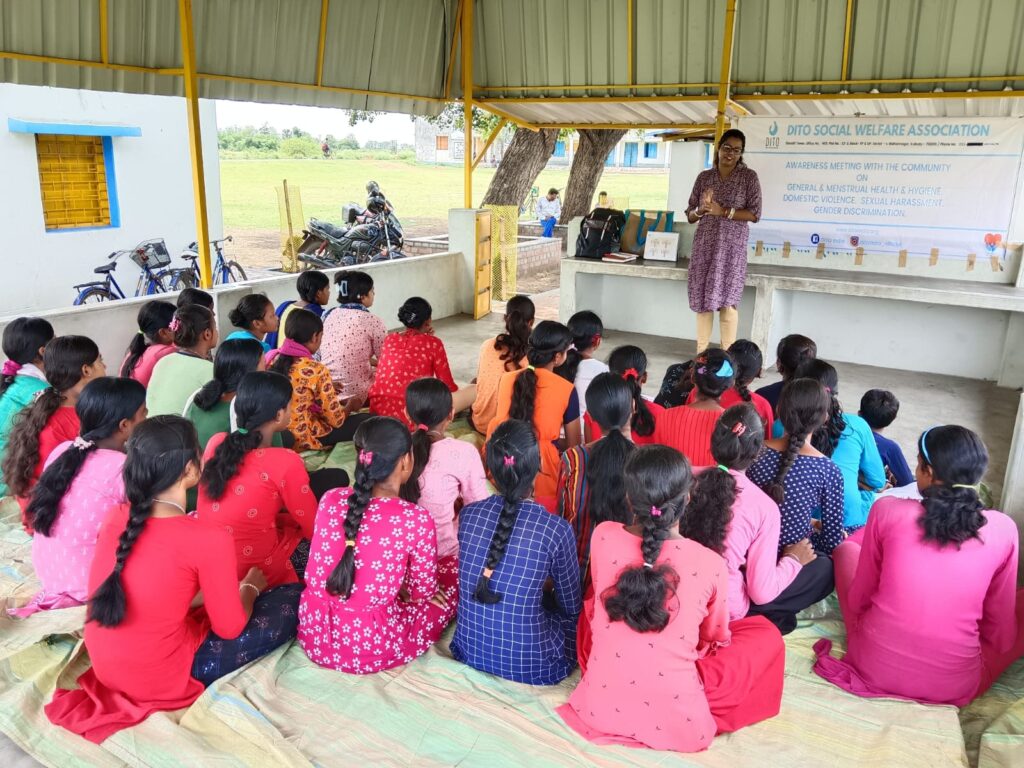
DITO regularly organises a series of Menstrual Health and Hygiene (MHM) camps across community spaces and local institutions. These camps created safe and open platforms where women and schoolgirls could learn about menstruation, proper hygiene practices, and the importance of self-care. Through interactive discussions and practical guidance, participants were encouraged to view menstruation as a natural process rather than a source of shame or silence.
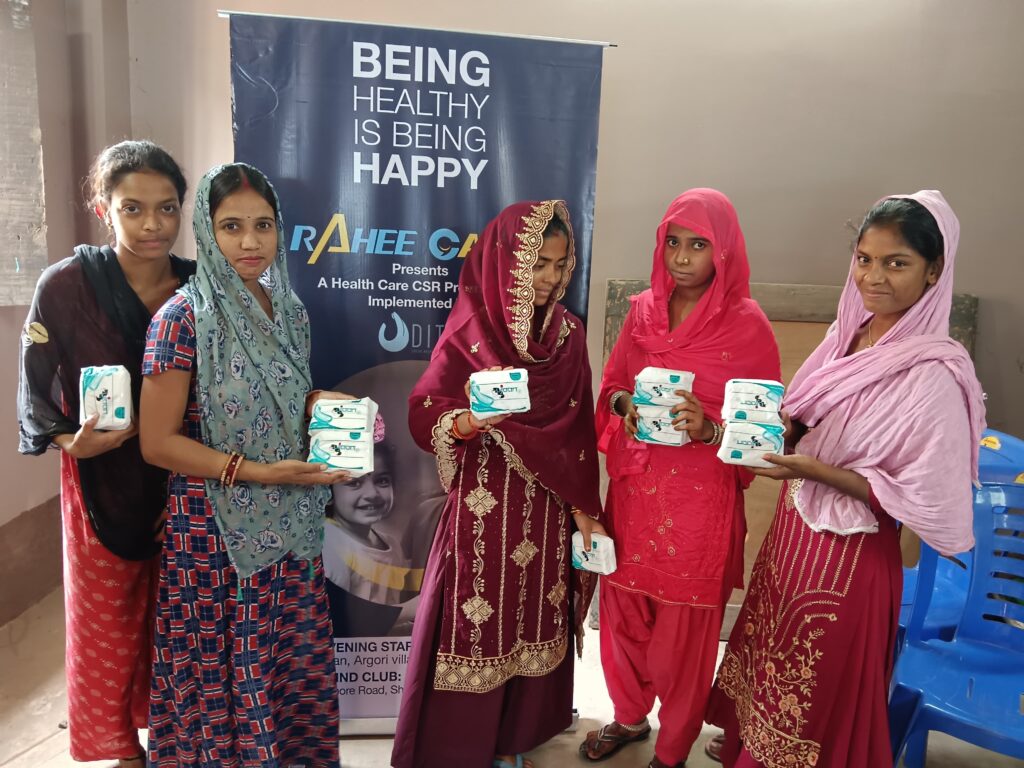
Complementing these awareness efforts, DITO Social Welfare Association introduced Ujaan, its own sanitary napkin brand, to ensure access to safe and hygienic menstrual products for poor and disadvantaged women. Sanitary napkins are distributed free of charge, promoting healthier alternatives to traditional cloth and reducing the risk of infections.
Together, awareness-building and access to hygiene products are helping women and girls make informed choices, take charge of their menstrual health, and become confident advocates for menstrual hygiene within their families and communities.